 EN
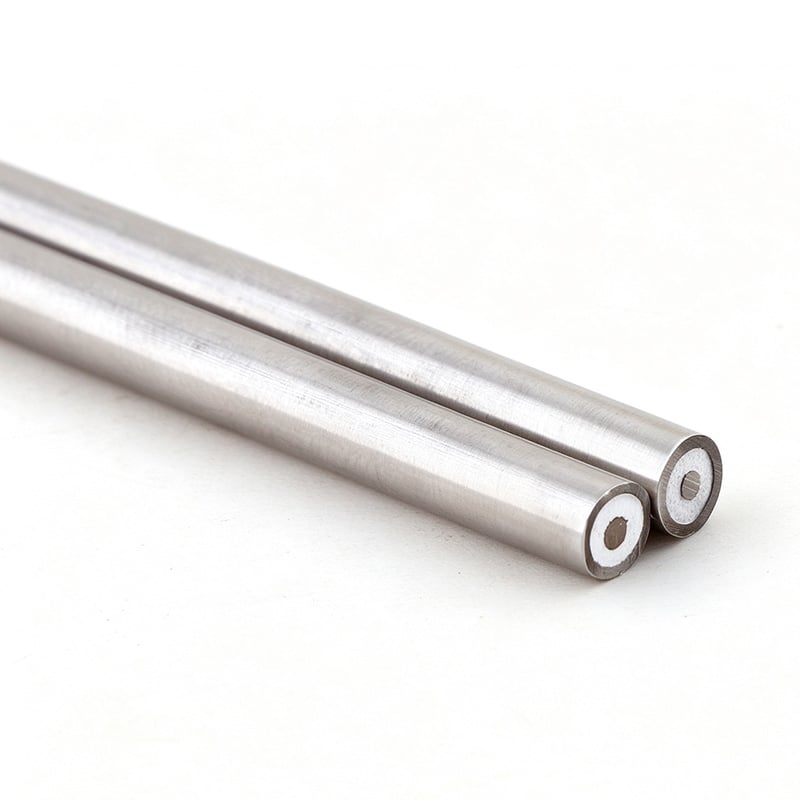
Mineral Insulated Heating Cable (MI Heating Cable) is a resistance heating product primarily used in high-temperature and demanding industrial environments. Its heating section typically consists of one or more resistance heating conductors, compacted magnesium oxide insulation, and a metallic sheath. This construction offers high-temperature capability, mechanical protection, and structural stability.
Compared with common Self Regulating Heating Cables and polymer-insulated constant wattage heating cables, appropriately selected MI cables can operate in certain higher-temperature or more demanding applications. However, temperature ratings, corrosion resistance, sheath materials, and hazardous-area approvals vary by product model and must be verified against the technical datasheet.
1. Oil, Gas, and Petrochemical Applications
In refineries, petrochemical plants, and oil and gas processing facilities, some process fluids have high viscosity, elevated freezing or solidification points, or strict transport temperature requirements. A drop in pipe temperature can increase viscosity, reduce flow, or cause crystallization and blockage.
Depending on the process requirements and product ratings, MI Heating Cables may be used for:
1. Heat tracing of crude oil, heavy oil, residue oil, and bitumen transfer lines.
2. Temperature maintenance of high-solidification-point chemical media and associated piping.
3. Local heating of tank outlets, valves, flanges, and pipe fittings.
4. Preheating and temperature maintenance of piping connected to high-temperature equipment.
5. Instrument impulse lines and auxiliary systems requiring freeze or solidification protection.
Suitable MI cables may also be selected for particular lines and equipment at LNG terminals, offshore oil and gas platforms, and other processing facilities. However, heating applications involving cryogenic LNG equipment require a separate engineering assessment; MI cable suitability cannot be inferred from its high-temperature capability alone.
In hazardous locations, the cable and accessories must have the required approvals. Area classification, temperature class, maximum sheath surface temperature, and electrical installation rules must be checked. A metallic sheath and mineral insulation do not automatically make an entire heating system explosion-protected.
2. Concentrated Solar Power and Molten Salt Thermal Storage
Concentrated solar power and molten salt storage systems are important high-temperature applications for MI Heating Cables. When the salt temperature approaches or falls below its solidification point, crystallization and blockage can disrupt thermal storage and transfer operations.
MI cables with suitable ratings may be used for:
1. Preheating, solidification prevention, and temperature maintenance of molten salt transfer lines.
2. Heating of molten salt tank inlet and outlet piping.
3. Additional heat at valves, flanges, and other areas with high local heat loss.
4. Piping connected to heat exchangers and auxiliary process systems.
5. High-temperature tracing circuits in selected thermal power plant storage retrofit projects.
Large molten salt tanks require an integrated thermal design. Local heat tracing must not be presented as a substitute for the complete tank heating system.
Different salt formulations have different solidification and operating temperatures. Cable selection must consider salt composition, design maintain temperature, maximum operating temperature, heat loss, allowable heat flux, and sheath compatibility. Maximum maintain temperature, maximum continuous operating or exposure temperature, and maximum intermittent exposure temperature are distinct ratings. A high de-energized exposure rating does not imply that the cable can continuously heat at the same temperature while energized.
3. Power Generation and High-Reliability Facilities
In power generation and other facilities with demanding reliability requirements, MI cables may be used for suitably rated high-temperature auxiliary piping, hot oil transfer systems, instrument lines, and selected equipment heating applications.
For nuclear facilities, only products that satisfy the required equipment qualification, quality assurance, and project specifications should be considered for particular auxiliary piping or equipment. Suitability must be assessed against safety classification, radiation environment, materials requirements, operating temperature, and maintenance strategy. Standard industrial MI cables must not automatically be considered suitable for nuclear safety-related equipment.
The inorganic insulation in an MI heating section can provide good high-temperature stability, but overall system reliability also depends on hot-to-cold joints, end seals, electrical connections, temperature controls, and protective devices. An MI heating system should not be described as maintenance-free.
4. High-Temperature Process Equipment and Fine Chemicals
MI Heating Cables may be used for hot oil lines, piping associated with distillation units, external auxiliary heating of reactors, local heat input at large valves and flanges, and preheating or temperature maintenance of selected high-temperature equipment.
Complex geometries, concentrated heat loss, or limited installation space require appropriate thermal calculations and cable layout design. MI cable alone does not provide precise temperature regulation. Processes requiring tight temperature uniformity or accuracy also need suitable sensors, controllers, and independent safety protection.
Laboratory and semiconductor-related process equipment may impose additional requirements for cleanliness, material compatibility, and equipment certification. Purpose-designed and validated heating assemblies should be selected; MI cable is not a universal replacement for precision process heaters.
5. Marine Engineering and Corrosive Environments
Salt spray, moisture, vibration, and mechanical impact increase material and installation demands in marine engineering. Appropriately rated MI cables may be used for selected high-temperature process piping on offshore platforms, auxiliary heating of marine equipment, and valves or pipe fittings requiring enhanced mechanical protection.
Corrosion resistance depends mainly on the metallic sheath material and actual exposure conditions. Some high-nickel alloys provide improved corrosion resistance, but compatibility must still be assessed against salinity, chemicals, concentration, temperature, and service duration. Marine applications may also require compliance with classification society or project-specific rules.
Low-temperature applications such as ordinary cabin heating or deck condensation control do not necessarily require MI cables. Selection should reflect temperature requirements, mechanical conditions, and economics.
6. Specialized Infrastructure Snow Melting and Freeze Protection
Certain specially designed and approved MI cables may be used for snow and ice melting in specific bridge structures, areas with demanding mechanical conditions, or specialized industrial installations. Airport runways, railway switches, and other critical infrastructure have dedicated engineering and safety requirements. Suitability cannot be established from the MI construction alone.
For ordinary residential driveways, walkways, agricultural greenhouses, or livestock heating, other dedicated heating products may be more technically and economically appropriate. MI cables should not be presented as the preferred solution for every snow melting or space heating project.
7. How to Select an MI Heating Cable
Engineering selection should consider:
1. Design maintain temperature: the required temperature of the process fluid or equipment.
2. Maximum continuous operating temperature and maximum intermittent exposure temperature, including shutdown, cleaning, and other exceptional conditions.
3. Heat loss and required output: calculated using pipe dimensions, insulation, ambient conditions, and fittings.
4. Metallic sheath material: selected for chemical compatibility, temperature, and mechanical requirements.
5. Hazardous-area approval: verification of the cable, joints, junction boxes, applicable temperature class, and complete installation.
6. Electrical supply and controls: designed around conductor resistance, effective heated length, voltage, and control requirements.
7. Installation and maintenance: minimum bending radius, joint locations, testing, and future access.
MI Heating Cables normally use series resistance heating. Their output depends on conductor resistance, effective heating length, and supply voltage. They cannot be arbitrarily shortened and energized in the field like some cut-to-length Self Regulating Heating Cables.
8. Installation and Safety Considerations
1. Follow the manufacturer's minimum bending radius to avoid damage to the metallic sheath, insulation, and conductor.
2. Maintain the specified spacing; avoid unapproved crossing, overlapping, and concentrated cable layouts.
3. Protect hot-to-cold joints from unnecessary bending, tension, and mechanical stress.
4. Locate cold leads, end seals, and junction boxes according to the specific installation instructions; one arrangement does not fit every system.
5. Protect end seals. Magnesium oxide insulation is hygroscopic, and moisture ingress can reduce insulation resistance.
6. Perform continuity and insulation resistance tests before, during, and after installation as required, and retain test records.
7. Provide suitable temperature controls, grounding, overcurrent protection, and required ground-fault protection.
8. For hazardous locations, verify approvals, temperature classification, and installation requirements for the complete system.
High-temperature capability does not replace temperature control or electrical safety protection. High-power-density applications also require careful consideration of sheath surface temperature and local heat concentration.
9. How Do MI Cables Compare with Other Heat Tracing Products?
MI Heating Cables are typically series resistance, constant wattage heating products. Therefore, MI and constant wattage are not mutually exclusive categories: MI primarily describes the mineral insulation and metallic sheath construction, while self regulation and constant wattage describe heat output behavior.
MI Heating Cable: Typically uses a metallic sheath and mineral insulation and is suited to certain high-temperature or demanding industrial applications. Output is primarily determined by resistance, length, and voltage.
Self Regulating Heating Cable: Uses a Positive Temperature Coefficient (PTC) conductive polymer core to adjust output in response to local temperature changes. It does not automatically disconnect the power supply.
Polymer-Insulated Constant Wattage Heating Cable: Uses a resistance heating element and polymer insulation to deliver a relatively consistent rated output under specified conditions, usually with a suitable temperature control system.
No single cable type is universally superior. Selection should consider design temperature, heat loss, environmental conditions, installation method, certification, and life-cycle cost.
Conclusion
MI Heating Cables provide valuable solutions for selected applications in petrochemicals, molten salt storage, high-temperature process equipment, and demanding industrial environments. Their mineral insulation, metallic sheath, and temperature capability are important advantages, but corrosion resistance, hazardous-area suitability, and operating limits must be confirmed for the specific product.
Engineering selection should consider design maintain temperature, maximum exposure temperature, heat loss, sheath material, area classification, and installation conditions, together with appropriate temperature controls and electrical protection. MI cables may offer long-term economic value in difficult-to-access, high-temperature, or corrosive installations, but life-cycle cost must be evaluated using purchase, installation, energy, maintenance, and replacement costs.
Table of Contents
- 1. Oil, Gas, and Petrochemical Applications
- 2. Concentrated Solar Power and Molten Salt Thermal Storage
- 3. Power Generation and High-Reliability Facilities
- 4. High-Temperature Process Equipment and Fine Chemicals
- 5. Marine Engineering and Corrosive Environments
- 6. Specialized Infrastructure Snow Melting and Freeze Protection
- 7. How to Select an MI Heating Cable
- 8. Installation and Safety Considerations
- 9. How Do MI Cables Compare with Other Heat Tracing Products?
- Conclusion